













Our Voices
Stories, insights, and learning pathways
Our Voices is ATN’s educational resource hub — personal stories that touch trauma at its heart, alongside pathways into the Trauma Insight Series, podcast episodes, and the broader Resource Center.
Explore resources
Start with the format that fits how you learn — short insights, conversations, or the full library.
Our Voices articles
First-person stories and reflections that put attachment trauma into lived context.
Just Say No to Teacher Burnout
In times of change, chaos, and crisis, prevent overwhelm and teacher burnout by being realistic about what you can and cannot do. Here's how.
Read story →
7 Ways to Help a Child Deal with Traumatic Stress
Humans are wired for connection and thrive in conditions of safety and security. When safety and security are compromised, we must do everything we can to restore a child’s felt sense of safety and security as fast as possible.
Read story →

5 Enlightened Ways to Think About Mental Health
Mental health problems should be thought of no differently than physical health problems. In fact, they are related: mental health problems affect physical health and physical health problems affect mental health.
Read story →
Who Do You Trust the Most?
During a session with your therapist, she hands you a paper with three concentric circles drawn on it. They represent relative levels of trust in relationships. The central circle is who you trust the most. She asks you who you would put in that spot. You don’t answer. She pushes. You remain silent. Finally, she suggests your parents. You nod. You know that she needs you to nod.
Read story →
Those Adoption Books
For years, I felt frustrated by parents and therapists suggesting I just read fill-in-the-blank adoption books by fill-in-the-blank authors. I’d already read all of those parenting books. I’d highlighted them and made notes in the margins. But the well-worn copies on my bookshelf didn’t seem to help. Sometimes the most worthy book suggestions even seemed to hurt our family.
Read story →

ATN: The Power of Community
[N]ext week, I will speak for the second time at the Creating Trauma Sensitive Schools Conference, where my topic will be “Behavior through the Lens of Attachment, Trauma, and Dissociation.”
Read story →

Parenting, Anxiety, and ACEs
Parenting with ACEs doesn’t always require intense therapy. Sometimes all we need is a friend, a conversation, someone to remind us that we will be okay, if not immediately, then eventually.
Read story →

Why Jeannie Can’t Tell Time
Staring at the analog clock in my therapist’s office, I wondered which hand was the big hand and struggled with my need not to go over my time. “I can’t read the clock,” I said. It was awkward because I was 62, but I really wasn’t.
Read story →The Search for a School That Fits
by: Melissa Sadin Teenager with problemsAs the parent of a child with moderate to severe attachment trauma, I have struggled for years to provide my son with an appropriate educational program. I have worked as a special education teacher and an administrator, so I know the lingo needed to get what I want at an IEP meeting. However, I was startled to discover recently that I wasn’t sure I knew what my son needed. My son always makes it very clear to all involved when something doesn’t work for him. The things that do work, however, are much more subtle and harder to see. My son has never said, “Oh, I like Mrs. Soandso. I feel safe in her class and am able to process language better there so I perform better academically.” The closest we get to that is, “She’s okay, I guess.”
Read story →Lessons Learned: Trauma Sensitive Teachers
By: Craig Peterson The right teacher can make all the difference – for every student and especially those children healing from past trauma. Boy with a Birthday CakeWhen my son Alex joined the family at the age of 10, he hadn’t been in a regular classroom since first grade. His behavior had been out of control, with anger filled rages getting the best of him. After grabbing a pair of scissors off a teacher’s desk and attempting to stab the principal in the neck, he spent a month in residential treatment. Upon his return to school, he was limited to two hours of instruction per day. A beefy ex-Marine stood guard.
Read story →Lessons Learned – Relationships over Things
By: Craig Peterson Craig Peterson's ChildrenI had the best of intentions. I never would have imagined my misstep – the precedent I was setting. After all, I was simply trying to be kind to my two newest sons. They came to me after a decade of extreme neglect and severe abuse at the hands of their birthmother’s boyfriend. Both endured more than 20 out-of-home placements after being stuck in the revolving door of family reunification.
Read story →Lessons Learned – Entitled and Detached
By: Craig Peterson Boys with GiftsSince my two sons hadn’t been diagnosed with Reactive Attachment Disorder when they were adopted at nine and ten, I didn't know to look for control. What I did see was their sense of entitlement.
Read story →Lessons Learned — Less Chores, More Backgammon
by: Craig Peterson My oldest son hated chores. Even the mention of the word set him off! IMG_1235[1]No wonder. Before being adopted, he was regularly told to not only watch his five younger siblings but also clean the family apartment. Although he tried – and he did try -- his step-father was never pleased with his effort and used the opportunity to beat him before taking his anger out on my son’s mother.
Read story →

Lessons Learned – Understand Attachment Even Before the Placement Begins
By: Craig Peterson Two Little BoysAlex and Travis are biological siblings. In 2001, they needed a home. One was nine and the other ten. I wanted to help. I felt called. Since I had done well with my first four children – all diagnosed with Fetal Alcohol Syndrome, I thought these two would be easier to parent. Both were high functioning and personable.
Read story →

A Bigger, Better & Bolder Blog
By: Gari Lister Welcome to ATN's new and expanded blog! We have been working the last several months to plan a more active - and hopefully interactive - blog that will become a real resource for all of us fighting in the trenches to help our children heal from trauma and attachment issues. As ATN's Blog Manager, I am proud to share in the exciting new initiatives of ATN.
Read story →Thanksgiving
By: Jane Samuel ‘Tis the season – for thanks giving that is. I see friends posting things they are thankful for each day on Facebook. There are probably similar lists on Twitter, Tumbler and Google+. I suspect my teens are being flooded with them on Instagram and my own email and snail mail is filling up with Thanksgiving letters from various non-profits, all worthy of a little monetary love AND thanks for their work making this a better world.
Read story →

“Loss” – The “L” Word
By: Jane Samuel Driving to school this morning my youngest (chronological age 11, emotional age – always open for debate) and I were discussing her father’s upcoming business trip to Asia. Pulling up to a stoplight, I glanced sideways and did a quick check of her demeanor. While she has gotten much better in the past few years about family members coming and going in her life, I still try to be on the lookout for signs that an upcoming loss - albeit a temporary one – might flip her internal emotional balance on its end. “Trigger her” as we say in the therapeutic parenting business.
Read story →Letting Go
by: Jane Samuel She calls me from the spa-sleep-over-birthday-party and I am not surprised. There is a catch in her voice and she is asking me to bring money. I don’t question. I just get in the car and drive to her.
Read story →Abandoned
By: Jane Samuel I knew the minute my husband pulled out of the lot and darted across the street to drop me at the pharmacy that it was a bad idea. Our youngest had run back into the retirement home where my father lived to retrieve a forgotten item and my husband thought it would be quicker to pull across, drop me, and run back and get her while I shopped. Problem is he didn’t tell her. He just figured he could get back before she noticed. Wrong.
Read story →Go Big: Self Care to the Tenth Degree
By: Gari Lister What is a good mom? Here’s how I would answer a questionnaire on how I was a good mom today: I drove my ten year old an hour and twenty minutes each way to skating camp; I tried really really hard to talk to my twelve year old about sensitive pre-teen things I cannot share here; I fed my kids mostly healthy gluten free meals; my house is reasonably clean; I taught my middle daughter how to complete a job successfully; I gave the girls all kinds of brain-strengthening vitamins; and I went to yoga. Ok, maybe I wouldn’t include the last item. But maybe I should.
Read story →This Ain’t My Mama’s Broken Heart
By: Gari Lister Four years ago today -- May 17, 2009 – my 17 year old daughter broke my heart and changed my life forever. She packed a bag, told her little sister not to tell us, and ran away from home with a boy she’d met a handful of times – a boy who murdered two people within a few months (literally). I didn’t realize what a pivotal moment it was right away; I thought it was just another episode in a series of Katya crises.
Read story →BMITW
By: Jane Samuel Last week I took our middle daughter out of town for four days to attend her close friend’s confirmation – in another country. Despite all her healing I still worried this trip would be too hard on our youngest – now ten-years-old and adopted at one. Luckily for her – and I – she was naïve as to how far away I would be (a long plane flight) and only knew I would be back in “four sleeps.”
Read story →

April 29, 2013 — Fourteen Years
By: Kathleen Benckendorf ATN is delighted to welcome Kathleen Benckendorf as a guest voice on Touching Trauma at its Heart. Kathleen, a parent member of ATN's Board of Directors, is a relentless researcher and seeker of answers. An engineer by education and experience, Kathleen has also trained as a bodyworker and in as many other therapeutic approaches and interventions as she has been able to convince the providers to let her attend. Her website, www.attachmentandintegrationmethods.com , describes these approaches and others.
Read story →My Life May Not Be Perfect, But I’m Not Going to Complain About it Any More
By Gari Lister Too many mornings this spring I have found myself waking up and saying, “My back hurts, I have a headache, I’m tired.” And I can’t even count how often I have picked up the phone and vented about something big . . . or something small. My kids refuse to eat their supplements, my youngest throws a fit (she’s 10), my husband eats the last strawberries . . . you name it, I vent, I complain, I whine. Or let me correct that: I vented, I complained, I whined.
Read story →Shake Off the Bad Mood
By Gari Lister This morning I started off my day with a cascade of nastiness from my usually reasonably-fun-to-be-around fifth grader. “I’m not going to eat those pills. Are you serious? Is that what we’re having for breakfast? Well, of course, we’re going to be late because of her [the sweeter younger sister].” First, I spent a moment thanking my yoga teacher for helping me to understand equanimity.
Read story →The Third World of Mental Health Care
By: Marc Deprey This Sunday, my daughter was given a new regime of meds to address her increased oppositional and violent behavior. Unfortunately, the wrong drug was written on her prescription and between that drug and all the other changes made she went into a severe manic episode. Over two days she just got worse and worse. By Monday night she was seeing things that weren’t there, trying to jump out of her window, screaming, and trashing her room.
Read story →Rules . . .
By: Gari Lister Experts advise that kids with developmental trauma need calm, stability and predictable limits. And in fact I know my youngest does better when she knows her schedule, and exactly what is expected of her. The problem is that peace, stability and a well-ordered life are not always easy to come by in a household filled with a bunch of poorly behaved dogs and cats, not to mention the children or broken appliances. For that reason, I’m always a little defensive about our organizational dynamics.
Read story →How Many Kids Do I Have? . . . Month Two as a Throw-Away Mom
By: Gari Lister Our oldest daughter, Katya, has been gone nearly two months. She packed the car with everything she could find, changed her phone number, blocked us on facebook, and disappeared into the urban Dallas wilds. In many ways, our life is back to normal, and I have adjusted to my new status. Only a few weeks ago, I couldn’t stop myself from pulling away from the little girls in subtle ways. I finally realized I was petrified they too would throw me away, walking away without a backward glance. I’m mostly now able to accept the risk.
Read story →Why Trauma Wouldn’t Let Me Attend the Trauma Conference
By: Marc Deprey Last Sunday, my son went into a rage so severe that he assaulted me and destroyed my car’s windows and body with head-sized boulders. He was arrested and taken to Juvenile Hall. It’s the first time I’ve ever been assaulted—by anyone, let alone my own child—and this is his first arrest. My daughter, who is also afflicted with developmental trauma, has been especially reactive this week beyond her usual explosiveness and destructiveness. So the trauma I have been experiencing this week has been so severe that I got sick (my immune system is probably in full retreat) on top of it all. Yesterday, I just gave into reality and cancelled my trip to the Trauma conference.
Read story →

How Possible is the Impossible?
By: Nancy Spoolstra Last weekend I saw the movie The Impossible with my husband and very pregnant daughter. The movie is about a family of 5 that miraculously survives the Indian Ocean tsunami intact … no family member perished. Most families were not nearly so fortunate. The movie is all about relationships. I don’t think there was a dry eye in the house … at least among the movie-goers who were healthy enough to be in relationship with one or more other people. I left that theater wanting to hug each and every member of my family who is near and dear to me. And it forced me once again to examine the dichotomy of my family dynamics.
Read story →A Swing and A Miss
By: Marc Deprey In my last entry, I listed a number of potential subjects to talk about on this blog and of course, I’ve decided not to talk about any of them today. I just want to talk about the heartbreak of never really being close to your kid.
Read story →Why I hung up on my son
By: Nancy Spoolstra It has been nearly five years since I regularly blogged at adoptionblogs.com, and I have been excited to resume blogging, although on a less rigorous schedule. So it was surprising to me that I was struggling to get this first blog written. I think I wasn’t quite sure how or where to start. As many of you understand, five years can be a long time and a big change in our families ... or, it might be five years later and the same old, same old. In my case, I am five more years down the path of redefining my life without the daily reality of breathing the same air as one or more children with severe attachment issues.
Read story →
It Doesn’t Hurt to Laugh
By: Anna Paravano-Frise Ok, let’s face it: “Sometimes you feel like a nut, sometimes you don’t.” (Hershey’s) Kind of like that nutty guy on the ceiling in the movie “Mary Poppins” who sang, “I love to laugh!” I really do love to laugh! I love anything and anyone that makes me laugh. BC (Before Child), I really bought into the notion that “laughter is the best medicine.” Life can be such a serious business so I made it a point to watch comedies and comedians as a way to release stress, fight depression, or simply have fun. Yes, I loved a good drama but when times got tough, I used laughter as one of my coping mechanisms.
Read story →
I’m Perfect…I’m a Failure
By: Julie Beem LuLu and I build gingerbread houses. We build them for the annual competition at her virtual school. She’s a serious competitor. Prior to the houses we built for the last competitions, I had absolutely no gingerbread house experience. It has been a trial by fire – and a lot of work! But the interesting thing is that it’s been a fruitful adventure and one that showcases some of her talents.
Read story →
Attachment — Barbie Style
By: Gari Lister Our attachment therapist a long time ago suggested that if my girls had a difficult time with my massaging and touching them, I could have them rub lotion on me. Well, I started out with lotion, but I have three girls so . . . the lotion turned into nail polish, and the nail polish turned into hair styling, and the hair styling turned into makeup. Every so often, one of my little girls runs into the bathroom and runs out with a lotion or a blush or a handful of hair accessories and gives me a hopeful look.
Read story →
Where to begin?
By: Marc Deprey Father and SonWell, here it is, the moment I’ve been thinking about. How to start my contribution to ATN’s new blog? I could write about the experience of parenting two kids, eleven months apart with Developmental Trauma Disorder and the whole whack-a-mole nature of that day-to-day experience. I could write about the fact that I can only take time to write this when my kids are asleep and I’m exhausted, or the idea that being around them wears me down to the core (and that I can’t imagine I’ll have any core left sometime soon).
Read story →
No, My Kids are Not Like Everyone Else’s
By: Gari Lister Mom and daughterUntil today, my first blog was going to be uplifting. I have three girls affected to varying degrees by their early trauma in orphanages in Russia and Ukraine, and things seemed to be going really well. We just finished a wonderful vacation with the two younger girls, and the third had returned home in October after years of living “on-her-own-traumatized-child-style,” which means she dropped out of high school and generally could not handle being part of a family. Unfortunately, though, we made the mistake that all of us moms and dads of traumatized children sometimes do. We forgot. We forgot she wasn’t like other teenagers, or us, or even the 11 year old (she’s 21). We forgot how messed up her brain is when she makes decisions – or doesn’t make decisions. We believed that she could handle what seemed so simple – feeding our cats and cleaning up after them. She doesn’t have a job (long story), and we agreed to pay her to feed them so she would have a little spending money. We asked neighbors to keep an eye out on things, and put our dogs in boarding.
Read story →Trauma Insight Series

Short video and PDF insights for trauma-informed practice — a companion to the stories above.
PDF
Dysregulation in the Classroom
Short practical reflection for trauma-sensitive practice.
Open resource →Introducing the Window of Tolerance
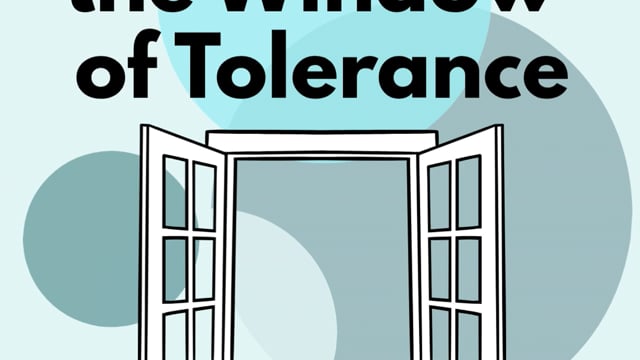
Short practical reflection for trauma-sensitive practice.
Open resource →
PDF
The Difference Between Discipline and Punishment
Short practical reflection for trauma-sensitive practice.
Open resource →Regulated & Relational Podcast
Conversations on attachment, regulation, and healing relationships.
Ep 128
The Epic IEP with Karen Mayer Cunningham
Karen Mayer Cunningham
Ep 127
The Future of ACEs with Dr. Robert Anda
Dr. Robert Anda
Ep 126
Attachment Theory – A Conversation with Karen Buckwalter, LCSW
Karen Buckwalter, LCSW
Ep 125
Humor – Amusement vs Sarcasm
Ginger Healy & Tracy Leonard
Ep 124
Comparison: How does it impact our emotional well-being?
Tracy Leonard & Julie Beem
Ep 123
The Stress of Transitions
Tracy Leonard, Ginger Healy & Julie Beem
Ep 122
The Hard Truth about Soft Skills
Why “soft skills” are essential for trauma-informed practice, relationships, and building resilient communities for children.
Ep 121
Ep 120
Ep 119
Let’s Talk About RAD with Andy Neal
Andy Neal
Ep 118
Nature, Earthing, and Grounding
How nature, earthing, and grounding practices support regulation, nervous-system recovery, and everyday relational health.
Ep 117
Using & Defusing with Humor
What if growth could sound like laughter?In this conversation, Billy Kaplan, a licensed clinical social worker at Treehouse Health, joins Ginger and Julie to explore how healing with…
Ep 116
A Community for Resilience
What if healing didn’t require a therapy license—only presence, connection, and courage?Andi Fetzner joins Ginger and Julie and shares how her Origins Training work in Arizona supports adults…
Ep 115
A Conversation about Generational Trauma
What are children learning that no one is explicitly teaching?Ingrid Cockhren joins Julie and Ginger to explore how historical trauma shapes social learning, schooling, storytelling, and bias across…
Ep 114
Why Mattering Matters
In this episode, Julie Beem and Ginger Healy explore Julie’s research on mattering—what it is, why it matters, and how it shows up in adult-child relationships. This episode…
Ep 113
Wellness Rooms and Other Ideas to Combat Gun Violence
In this powerful and deeply human conversation, Ginger and Julie sit down with Josh Novick—licensed therapist, educator, national speaker, and founder of Trust & Grow Consulting—to explore what…
Ep 112
Exploring the Science of Learning with Zaretta Hammond
Zaretta Hammond
Ep 111
Joy – An Act of Resilience
In this heartfelt and reflective episode, Julie Beem and Ginger Healy return to a profound conversation from Season 1 with the late Cissy White—trauma survivor, fierce advocate, and…
Ep 110
Ep 109
The Power of Play for Healing and Connection
Play isn’t just fun—it’s essential. In this episode, Ginger and Julie unpack the science, healing power, and everyday possibilities of play. From brain development to emotional regulation, play…
Ep 108
Child Abuse Prevention
What would it look like if we built a society that prevents child abuse and neglect—before it ever begins? In this episode, Ginger and Julie sit down with…
Ep 107
What Does RAD Look Like at School?
This is a follow-up to Episode 101, where we discussed the two recognized attachment disorder diagnoses and their impact on families. In this episode, we focus on how…
Ep 106
Healing Despair and Moral Injury in Educators
Sheri Kreher, LCSW
Ep 105
Rethinking Behavior Plans with the Bowmans
the Bowmans
Ep 104
Parents Have Feelings Too – a book interview with Hilary Jacobs Hendel & Juli Fraga
Hilary Jacobs Hendel & Juli Fraga
Ep 103
Embracing Hope for FASD, ADHD, Neurdivergence, and Traumaa
In this episode of Regulated & Relational, hosts Julie Beem and Ginger Healy sit down with two fathers on a mission to transform the way families and schools…
Ep 102
Exploring FASD
In this unforgettable episode, Ginger and Julie sit down with the one and only Barb Clark—a powerhouse trainer, parent, and advocate known for saying the things most people…
Ep 101
What you need to know about Attachment Disorders
In this foundational episode of Regulated & Relational, Ginger and Julie dive deep into attachment disorders—what they are, how they’re diagnosed, and the realities families face when raising…
Ep 100
Exploring PDA (Pathological Demand Avoidance)
In this enlightening episode, Ginger Healy and Julie Beem sit down with Diane Gould, LCSW, and leading voice in the PDA (Pathological Demand Avoidance) movement in North America.…
Ep 99
Joy – An Act of Resilience
In this heartfelt and reflective episode, Julie Beem and Ginger Healy return to a profound conversation from Season 1 with the late Cissy White—trauma survivor, fierce advocate, and…
Ep 98
Empathy Revolution
In this thought-provoking episode of Regulated & Relational, Ginger Healy and Julie Beem invite you to explore the transformative power of empathy—not just as a personal virtue but…
Ep 97
Birthday Reflections
In this special birthday-themed episode of Regulated & Relational, we’re doing something a little different—and a lot more personal. Julie Beem is celebrating her birthday by inviting the…
Ep 96
The Importance of Therapeutic Parenting
In this insightful episode of Regulated & Relational, hosts Ginger Healy and Julie Beem are joined by Ce Eshelman, LMFT—an expert in attachment, trauma, and therapeutic parenting. With…
Ep 95
The Dopest Coach
Today, we’re honored to sit down with a friend of ATN, Martin Ali Simms—a Neurosequential Sports Specialist, Mental Health Consultant, and Founder of The DOPE Coach Academy. Martin…
Ep 94
Two White Women Talking about DEI
In this vital episode, Julie and Ginger dive into the intersection of Diversity, Equity, and Inclusion (DEI) with trauma-informed practices. As DEI comes under political and cultural scrutiny,…
Ep 93
Using the Arts as a Healing Tool
In today’s episode of Regulated & Relational, Ginger Healy and Julie Beem are joined by a special guest, Cally Flox, a teaching artist, educator, and the lead author…
Ep 92
Learning About and Celebrating Neurodiversity
In this insightful episode, we sit down with educator, writer, and advocate Meghan Ashburn to explore how we can better support autistic students—both in and out of the…
Ep 91
Insights into Self-Compassion from TSS2025
In this episode of Regulated & Relational, Julie Beem and Ginger Healy discuss the concept of self-compassion, drawing insights from Dr. Kristin Neff's work. Dr. Neff, a researcher…
Ep 90
Brain Development Basics
Join Ginger and Julie as they wrap up the season by talking about brain lessons. A little basic brain knowledge can go a long way in understanding behaviors…
Ep 89
Adult Nervous Systems
Join Julie and Ginger as they speak with Dr. Lori Desautels Dr. Lori Desautels has been an Assistant Professor at Butler University since 2016, teaching undergraduate and graduate…
Ep 88
Let’s Inspire, Inform, Instruct and Include Students
Join Julie and Ginger as they speak with Anashay Wright, a national award-winning educator, speaker, consultant, and founder of Authentic Disruption and Disruptive Partners, a community-based leadership development…
Ep 87
Understanding Interoception: The Mind-Body Disconnect
Join Julie and Ginger in speaking to Occupational Therapist, Kelly Mahler about Interoception and the body-mind disconnect. Kelly teaches that as caregivers and educators, we should be curious…
Ep 86
No More Sad Mommas; No More Sad Babies
Join Julie and Ginger in speaking to Carey Sipp talking about early childhood intervention. Carey is a solutions journalist and “Neuro-Nurturing ®” advocate who has written about the…
Ep 85
Back to the Basics – The Trauma-Sensitive School Basics
Join Ginger and Julie as they talk to Mathew Portell. Mathew has dedicated a decade and a half to education in his role as a teacher, instructional coach,…
Ep 84
Digging into Attachment and Parenting Challenges
In this episode Ginger and Julie talk to Dafna Lender who is an international trainer, EMDR therapist, and supervisor for practitioners who work with children and families. She…
Ep 83
Being Safe Enough Not to Bully
Listen in as Julie and Ginger talk to Ginger Lewman about Bullying. Ginger Lewman is a national consultant & keynote speaker with ESSDACK, a non-profit education service center…
Ep 82
Oxytocin – What it is and what we need to know
In Episode 82, Ginger & Julie dig into Oxytocin. Oxytocin is often called the “love” or “cuddle” hormone. High levels of oxytocin correlate with the speed of wound…
Ep 81
The Theory of Hope
In this episode Julie and Ginger interview ATN’s dear friend, Dr. Melissa Sadin. Melissa teaches us about Hope Theory based on the work of Gwinn and Hellman and…
Ep 80
Exploring Our Polyvagal World
In this Episode Julie and Ginger teach about the PolyVagal Theory and introduce us to Our PolyVagal World a new book by Dr. Stephen Porges and his son…
Ep 79
The Three Pillars of A Healthy Life – Working our Way to Wellness
In this Episode Julie and Ginger talk to Dr. Rick Cain. Rick specializes in the neuroscience of stress and well-being. He helps us explore how wellness practices in…
Ep 78
“What are We Here to Do?” A conversation with Superintendent Dr. Amy Fast
Superintendent Dr. Amy Fast
Ep 77
Trauma-Informed Step-Parenting
In today’s episode, Ginger and Julie dive into Step-Parenting. Approximately 40% of all families are blended families, which are defined as divorced and/or remarried families or those living…
Ep 76
Diving Deep into Co-Regulation
Co-Regulation: Stepping in with soothing, responsive interactions to help a person be able to regulate their emotions. OR Borrowing the ability to attain a regulated state from…
Ep 75
The 5 Love Languages of Neurodiversity
In this episode, Julie and Ginger share the Five Neurodivergent Love Languages from @neurowonderful. Info dumping. Sharing information about topics that excite you and that you have an…
Ep 74
Nurturing Neurodiversity in the Educational Environment
In this Episode Julie and Ginger seek to increase awareness and acceptance of the strengths that neurodivergent children have. Neurodiversity means valuing all types of thinking and learning…
Ep 73
Becoming a Trauma-Informed Restorative Educator
In this Episode, Julie interviews Joe Brummer and Marg Thorsborne about their new book, Becoming a Trauma-Informed Restorative Educator. Both Joe and Marg have years of experience and…
Ep 72
Ep 71
Children’s 4 Irreducible Needs
In his book, The Myth of Normal, Dr. Gabor Mate points out that all children have 4 irreducible needs: a sense of security trust in the world interrelationships…
Ep 70
Ep 69
My Trauma Isn’t Your Trauma
In this episode Julie and Ginger talk about the 3Es of trauma. SAMHSA, the Substance Abuse and Mental Health Services Administration of the US government, coined the term…
Ep 68
Exploring Baffling Behaviors with Robyn Gobbel
Robyn Gobbel
Ep 67
A Conversation about Trauma-Informed Care with National PTA President, Yvonne Johnson
National PTA President, Yvonne Johnson
Ep 66
Addressing Working Memory in a Trauma-Sensitive Classroom
In this episode, Julie and Ginger invite Jen Alexander and Jennifer Dickey into the studio. They have come to talk about executive function skills and working memory. You…
Ep 65
The Self-Reg Framework
Today, Julie and Ginger invite Dr. Susan Hopkins into the studio. Dr. Hopkins, along with Dr. Stuart Shanker, will be keynoting at ATN’s 7th Annual Creating Trauma-Sensitive Schools…
Ep 64
This Year’s Retrospective
In this episode, Julie and Ginger invite Lorraine Schneider into the studio to chat about the episodes from season 3 and there were some really great ones! Lorraine…
Ep 63
The Biology of Attachment Trauma
In this episode, Julie and Ginger welcome Dr. Aimie into the studio. Basically, Dr. Aimie is amazing. She is a double board-certified physician, boarded in both preventive and…
Ep 62
What Does It Mean To Be Trauma-Informed?
In this episode, Julie and Ginger delve into the definitions of trauma-informed. While this seems very simple, there are many definitions floating out there and we wanted to…
Ep 61
Gratitude, Grounding and Glimmers
Today Julie and Ginger are talking about the 3 G’s: Gratitude, Grounding and Glimmers. These are basic mindfulness strategies that provide emotional safety in both the home and…
Ep 60
What Can Be Done About The School to Prison Pipeline?
In this episode, Julie and Ginger talk about the school to prison pipeline with Leonard Webb. What an important topic this is! Leonard retired from law enforcement and…
Ep 59
What is the Vagus Nerve?
In this episode, Julie and Ginger discuss the Vagus nerve and other occupational therapist topics with Allison Morgan. Allison is the founder and CEO of Zensational Kids, an…
Ep 58
Inner Working Models – Where do they come from?
In this episode Julie and Ginger talk about the Inner Working Model. This is basically the blueprint for how we connect with others. John Bowlby says it best…
Ep 57
Creating a Regulating Classroom Environment
In this episode, the studio is full. Julie and Ginger have Jen Alexander and Anna Paravano as guests. Jen Alexander is a veteran educator, counselor, and long-time ATN…
Ep 56
Getting on the Same Page: Teacher-Parent Relationships
In this episode, Julie and Ginger are talking about relationships between parents and teachers with their guest host, Jessica Harris. Jessica was a teacher with 17 years of…
Ep 55
Ep 54
The Importance of Belonging
In this episode, Julie and Ginger talk about Belonging. And what an important concept that really is! Love and belonging are crucial human needs and Brene Brown says,…
Ep 53
Unpacking Our Griefcase
In this episode, Julie and Ginger explore the concept of grief by welcoming Emelio Parga into the studio. Emelio is the founder and Executive Director of the Solace…
Ep 52
Ever Wonder About Curiosity?
In this episode, Julie and Ginger are deep-diving into the concept of curiosity. Brene Brown defines curiosity as recognizing a gap in our knowledge about something that interests…
Ep 51
Diving into Anger
In this episode, Julie and Ginger dive into anger! Brene Brown defines anger as an emotion we feel when something gets in the way of our desired outcome,…
Ep 50
Exploring Interoception
In this episode, Julie and Ginger invite Connie Persike into the studio to talk about interoception, one of our hidden senses. Interoception is the ability to process information…
Ep 49
Advocating for Trauma-Informed Special Education
In this episode, Julie and Ginger invite a special guest, Bill Zee, into the studio. Bill is the Chair of the Education Law Group at Appel, Yost &…
Ep 48
The Power of the Pause
In this session, Julie and Ginger invite Dr. Jon Baylin into the studio. Dr. Baylin received his doctorate in clinical psychology from Peabody College of Vanderbilt University in…
Ep 47
The Importance of Feeling Safe
In this episode, Julie and Ginger discuss the concept of “Felt Safety”. You can’t trust, heal, or learn in a state of unsafety. This isn’t only about physical…
Ep 46
Our Hidden Senses
Today Julie and Ginger invite Jessica Sinarski into the studio. If you think her name seems familiar, then you are correct. Jessica has been here before. This is…
Ep 45
Preventing Childhood Sexual Abuse
In this episode Ginger and Julie invite Tracy Leonard into the studio. Tracy is the Programming and Partnership Manager at the non-profit, Darkness to Light. Darkness to Light…
Ep 44
Trauma in the Pews
In this Episode, Julie and Ginger welcome Dr. Janyne McConnaugheyinto the studio. Janyne has a long career in teaching, teacher education and an expertise in early childhood development.…
Ep 43
Exploring the River of Cruelty
In this episode, Julie and Ginger welcome Rebecca Lewis-Pankratz into the studio to talk about the concept of the River of Cruelty. Rebecca fought her way out of…
Ep 42
What is Blocked Care
In this episode, Julie and Ginger talk about the concept of “Blocked Care”. Drs. Daniel Hughes and Jonathan Baylin first coined this concept in their book, Brain Based…
Ep 41
Trauma-Informed Teaching and IEPs
In this episode of Regulated and Relational, Julie and Ginger invite long-time ATN friend, Dr. Melissa Sadin into the studio. Simply put, Dr. Sadin is a developmental trauma…
Ep 40
What Makes Mr. Chazz Tick?
In this episode, Julie and Ginger invite Mr. Chazz Lewis into the studio. Mr. Chazz, a former Montessori school teacher, is an educational specialist, a keynote speaker, a…
Ep 39
The Regulated Classroom
In this episode, Julie and Ginger invite Emily Daniels into the studio to talk about how to create a regulated classroom. Emily is a trainer, consultant, facilitator, leader,…
Ep 38
Brain-Body Parenting
In this episode, Julie and Ginger invite Dr. Mona Delahooke into the studio. Dr. Delahooke discusses how to raise joyful and resilient children – and isn’t that the…
Ep 37
Serve and Return
In this episode, Julie and Ginger talk about the concept of Serve and Return. This notion was introduced through the Center on the Developing Child at Harvard University.…
Ep 36
Therapeutic Parenting 102
In this episode, Julie and Ginger continue their discussion of therapeutic parenting. If you are caring for a child with a trauma history, you know that therapeutic parenting…
Ep 35
Therapeutic Parenting 101
In the next two episodes, Julie and Ginger deep dive into the concept of therapeutic parenting. The healing of childhood trauma comes directly from relationships and a child’s…
Ep 34
Helping Teen Brains with Improv
In this episode Julie and Ginger welcome Scott Kuenneke and Mary DeMichele into the studio. Scott is an integral part of the CALO Programs Residential Treatment Facility clinical…
Ep 33
A New School Year: Hopes and Challenges
Julie and Ginger invite Sandra Lake and James Moffett into the studio. They are both awesome trauma informed educators, and in this episode, they are discussing what it…
Ep 32
Secondary Traumatic Stress
In this episode, Julie and Ginger discuss Secondary Traumatic Stress. This is a hard topic to talk about, but it is so important. Ginger says, “Secondary traumatic stress…
Ep 31
Ep 30
Ep 29
Boundaries
In this episode, Julie and Ginger are discussing boundaries. They got a lot of insight from Brene Brown’s book, Atlas of the Heart. ATN’s Team R&R, an online…
Ep 28
The Challenges of Using Praise
Today Julie and Ginger talk about praise and how to use it effectively in the home and in the classroom. They also discuss some of the challenges of…
Ep 27
Disappointment and Expectations
In this episode, Julie and Ginger talk about their latest book study, Atlas of the Heart, by Brene Brown. ATN’s Team R&R, an online community for educators, is…
Ep 26
Ep 25
Ep 24
Ep 23
Ep 22
The Balance of Structure and Nurture
In this episode, Julie and Ginger talk about the delicate balance between structure and nurture. What are the differences in punishment, consequences, accountability, and discipline? These terms are…
Ep 21
Building Resilience during Covid…A Reflection on What We’ve Learned
In this episode, Julie and Ginger reflect on what our lives have been like dealing with Covid and building resilience throughout the pandemic. Ginger says that “It’s important…
Ep 20
Reframing the Narrative with Jessica Sinarski, LPCMH
Jessica Sinarski, LPCMH
Ep 19
The Re-Set Process: An Interview with Dyane Carrere
Dyane Carrere
Ep 18
Pushing Past Your Own Perspectives – Interview with Emily Meeks and Taneesha Thomas
Emily Meeks and Taneesha Thomas
Ep 17
What is a Trauma-Informed School?
In this episode, Julie and Ginger talk with Dr. Jenna Lichter, ATN’s Trauma-Sensitive Schools Coordinator. Listen in to learn more about trauma sensitive schools - what they are…
Ep 16
Ep 15
Holiday Hang-Ups
In this episode Julie and Ginger acknowledge that the holidays are not always full of cheer for all families. Children with traumatic experiences may not be able to…
Ep 14
Understanding Shame – Part 2
In this episode, Julie and Ginger revisit the concept of shame. Shame is a dangerous tool that leads to maladaptive behaviors. Ginger says that “Shame is much more…
Ep 13
Understanding Shame- Part 1
In this episode, Julie and Ginger introduce the concept of shame. According to Brene Brown, a world-renowned social worker with a focus on shame, shame is an “intensely painful…
Ep 12
Exploring Burnout
In this episode Julie and Ginger discuss the New York Times bestselling book Burnout: The Secret to Unlocking the Stress Cycle. What is burnout? How do you know…
Ep 11
How Big is Your Window?
In this episode, Julie and Ginger talk about the Window of Tolerance, specifically what level of stress can we tolerate and grow from and what we can do…
Ep 10
Why Rewards & Punishments Don’t Always Work
Julie and Ginger discuss why rewards and punishments don’t work for traumatized children. What are rewards? What are punishments? What are consequences? Why don’t they work and what…
Ep 9
Ep 8
OMG! My Child Needs Special Education!
Today Julie and Ginger partner with Michele Nigliazzo, ATN’s Court Advocacy Director. They discuss the impact of discovering that your child needs Special Education services. They reveal that…
Ep 7
The Importance of Together
Today Julie and Ginger talk with Stephanie Garde, ATN’s Operation Manager to discuss peer support. Parent-to-parent support is the root of the foundation of the Attachment & Trauma…
Ep 6
What Trauma Looks Like in the Classroom
Today Julie & Ginger dig into how the impacts of trauma show up as behaviors in the classroom. While it’s not always easy to tell, we’re going to…
Ep 5
Getting Back to “Normal”: A Look at Collective Grief
What does it feel like as we start to get back to “normal”? Ginger and Julie are exploring the emotional impact of the pandemic...the collective grief. What is…
Ep 4
Why Regulated?
In Episode 4, Ginger & Julie dig into Regulation and why being Regulated is part of the title of our podcast. So what do we mean when we…
Ep 3
Why Relational?
In Episode 3, Ginger & Julie dig into Attachment – what it is and how it’s developed. We’ll take a look at Attachment Theory and the 5 attachment…
Ep 2
The Hope is in Resilience
The single most common factor for children who develop resilience is at least one stable and committed relationship with a supportive parent, caregiver or other adult. These relationships…
Ep 1
What is Trauma?
In our first episode, we start at the beginning by defining "What is Trauma?" And discussing why creating a podcast at this point in time is a good…